SERVICE DESIGN + PRODUCT
OFS HUB — Internal Operations System
A real internal operations system designed and shipped for the people running Oslo Skateboarding Association every day.
01 — Problem / Context
OSF runs two skateparks serving a team of around thirteen people across admin, crew, and rookie roles. Operations were paper-based: shift handovers, cash counting, inventory, cleaning logs, and incident reports lived in sheets, memory, and informal messages. The system needed to simplify the work without flattening the informal team culture that makes the parks function.
02 — The Challenge
The complexity was not only technical. Different roles needed different permissions, while sensitive workflows — money handling, safety incidents, approvals — had to be reliable enough for daily use. A key design condition was that OSF operates across two parks: many workflows overlap, but not every employee works in both places and not every routine is identical. The system therefore separates park-specific data while allowing people with access to toggle between OSH and SKUR13 and clearly see what belongs where. The challenge was to add structure without imposing process for its own sake.
03 — What I Designed & Built
01
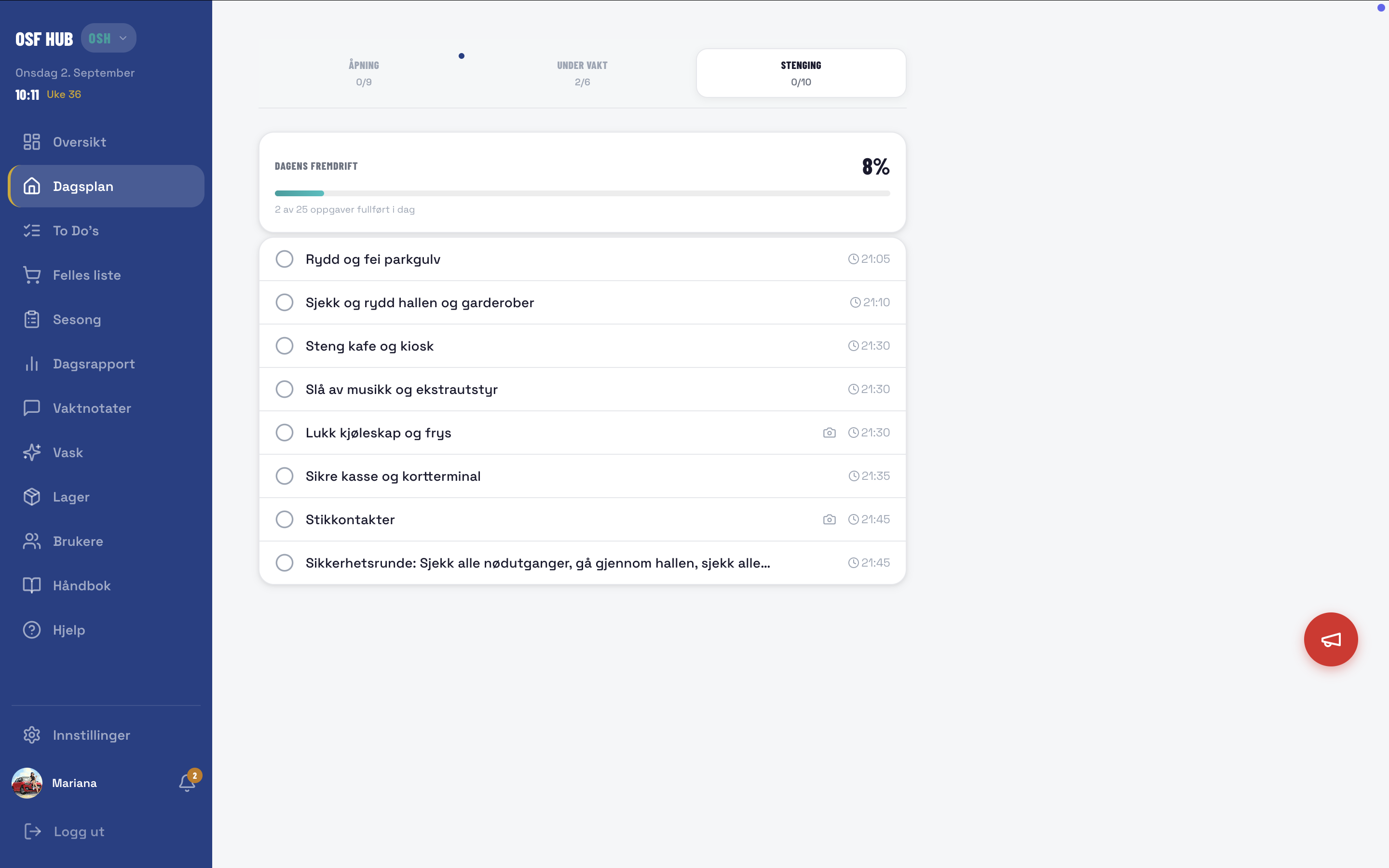
Dagsplan
Shift routines by block — open, during, close — with rookie mode and an emergency button.
02
Daglig logg
Daily sales tracking across cash, Vipps, card, two kiosk registers, and iZettle reconciliation.
03
Statistikk
Revenue and visitor graphs by period and park, designed for fast operational reading.
04
Vaktnotater
A shift notes feed with photos, replies, long notes, and admin moderation.
05
Lager
Inventory with categories, variants, pricing, stock alerts, and role-based pricing.
06
Vask
A digital cleaning log that replaced the paper checklist.
07
Felles liste
A shared task and shopping list with an approval workflow.
08
Oppgaver
A bidirectional task hub with photo attachments and clear ownership.
09
System layer
Incidents, requests and approvals, notifications, handbook, user management, and role-based access.
04 — Process & Approach
I worked in weekly co-design cycles with stakeholders, using real friction points from the parks as the brief. Each feature solved an operational pain point, from shift routines to reconciliation to cleaning accountability. I built the system in Base44 with React and Tailwind for rapid iteration and deployment; it is live in both parks and updated monthly based on crew feedback.
05 — Result
OFS HUB replaced paper-and-memory operations with a daily-use tool, digitalizing sensitive workflows around money, safety, and handovers while preserving team culture. It is live and actively used across both OSF locations — a direct application of service design as systems work that makes people’s work lives better.
06 — Visual Section
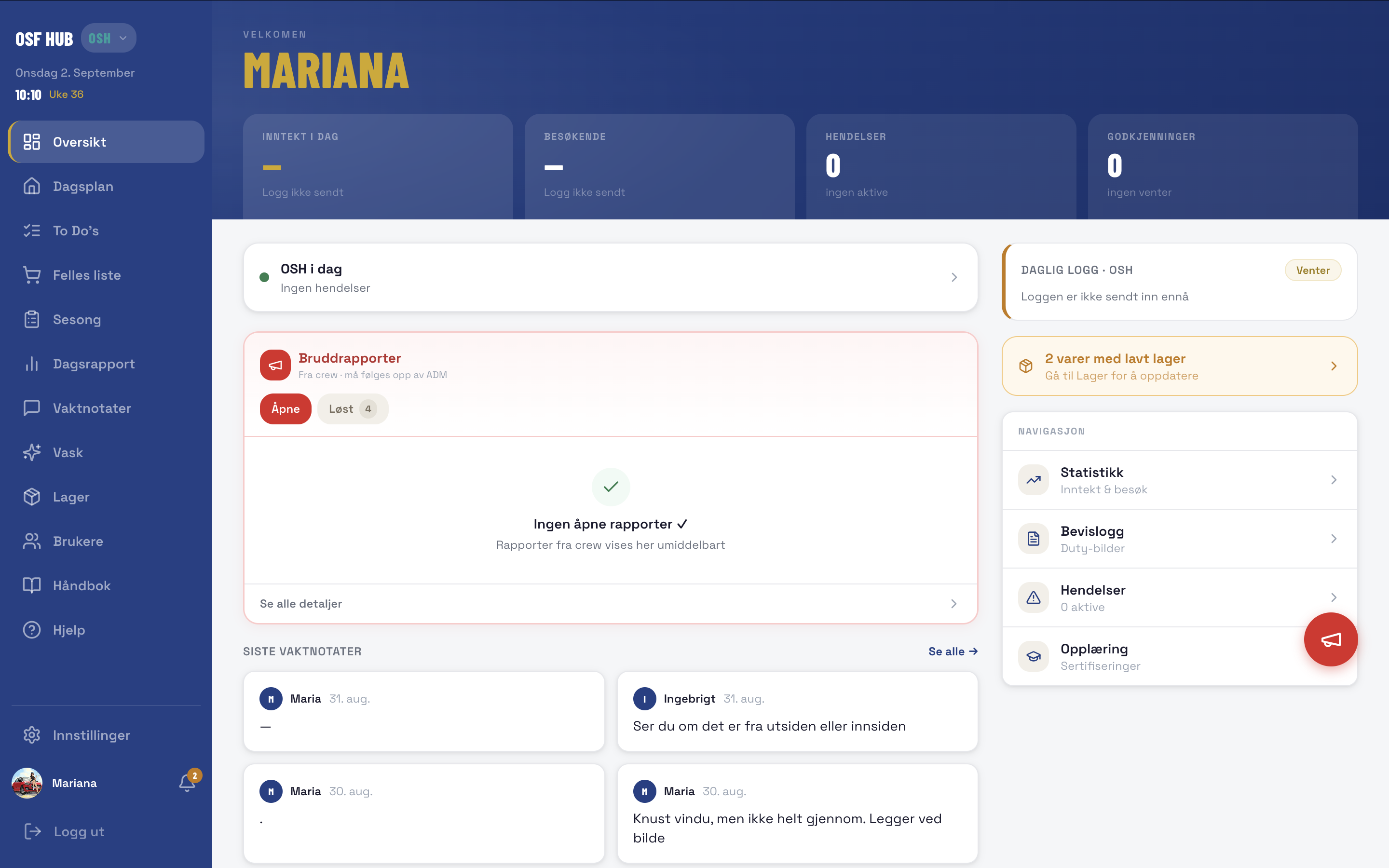
Operations overview
A daily command center for income, visits, incidents, approvals, notes, and navigation across the skatehall.
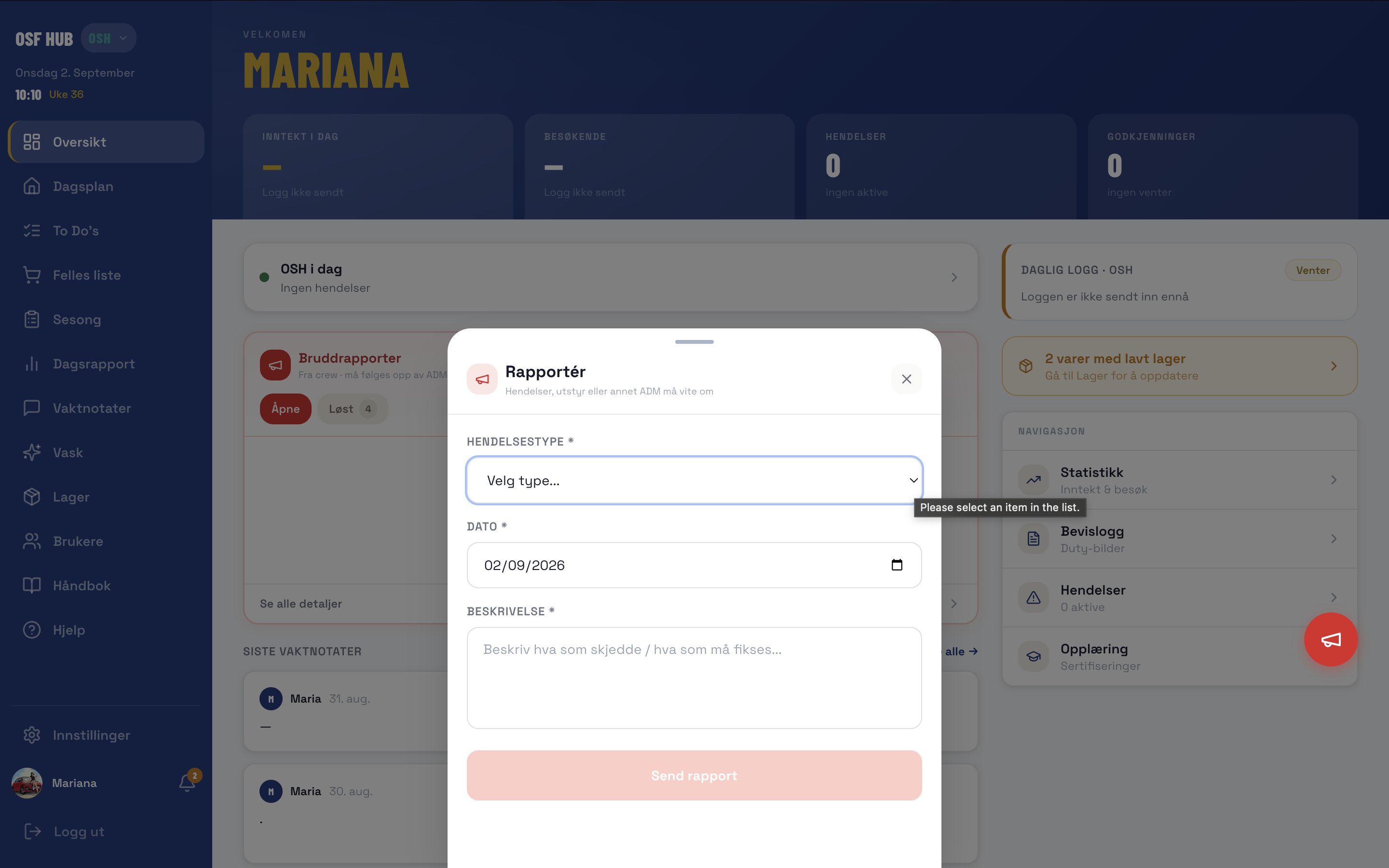
Incident reporting
A lightweight reporting flow for crew members to document incidents and keep admin visibility clear.
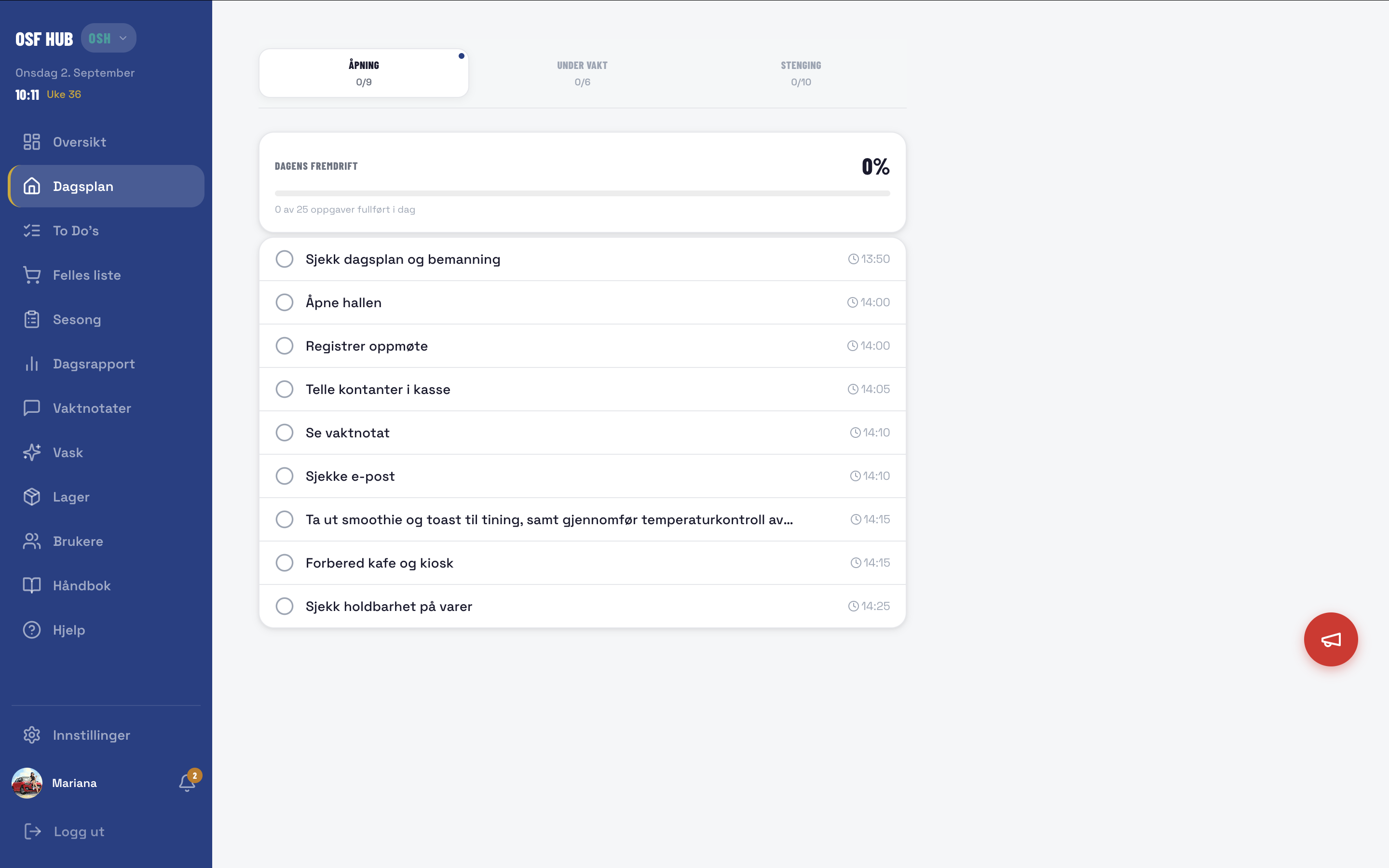
Daily shift plan
Task routines are organized by shift phase, helping the crew understand what needs to happen and when.
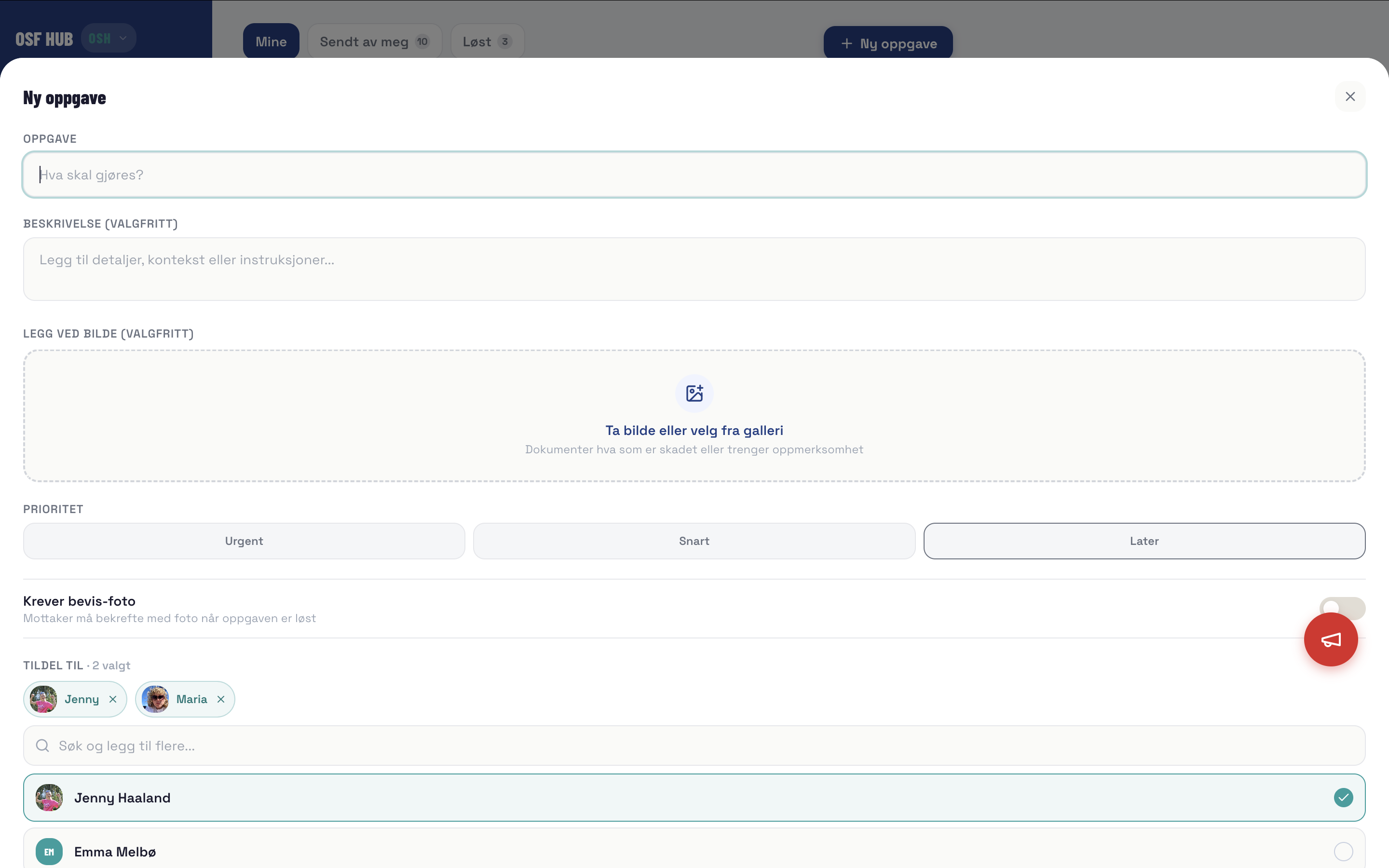
Task creation
Admin can assign work, add context, require proof photos, and route tasks to the right people.
Shared list
A practical shared purchasing and to-do list keeps small operational needs visible before they become friction.
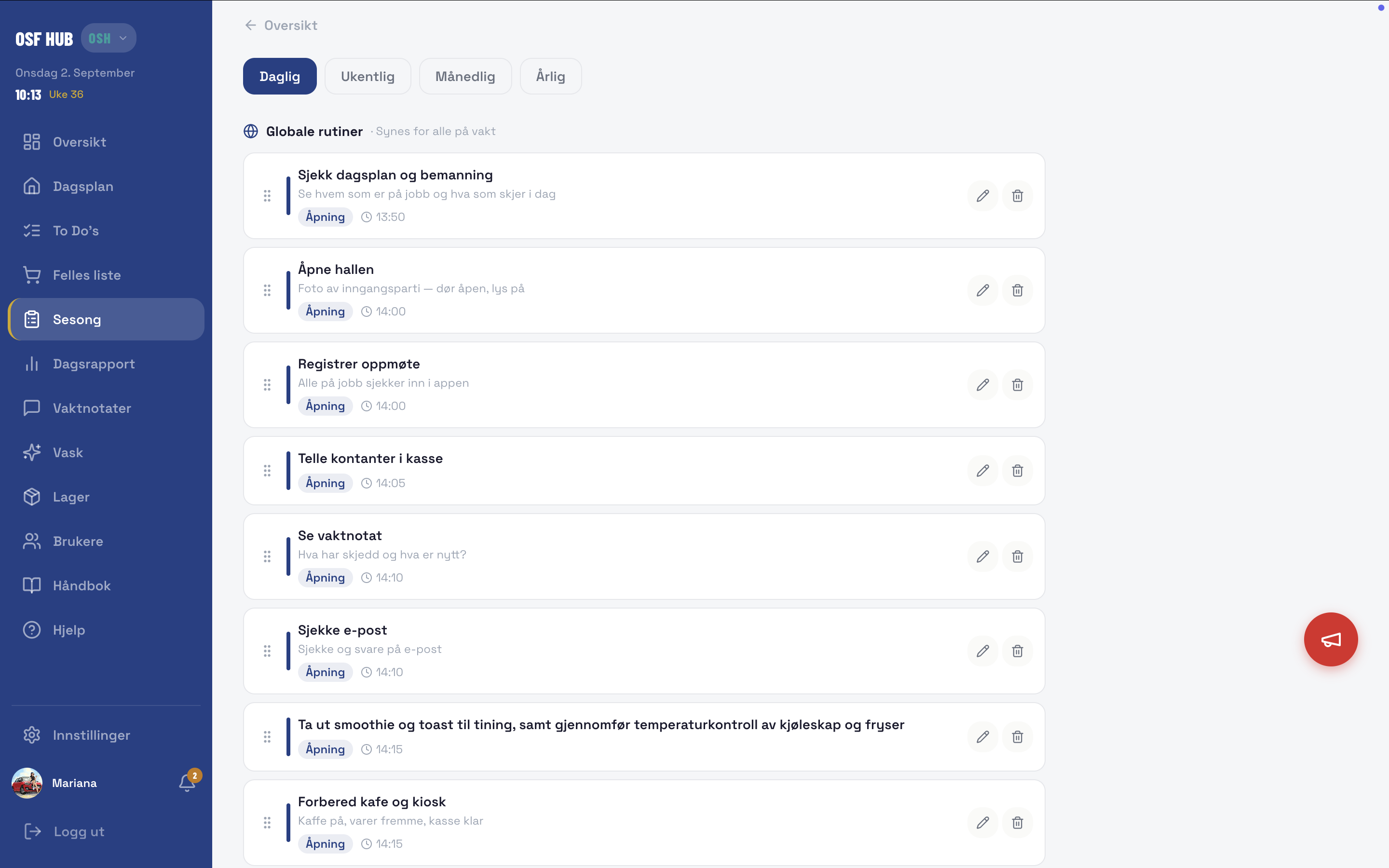
Season routines
Recurring routines can be managed by cadence, making daily operations editable without changing the system itself.
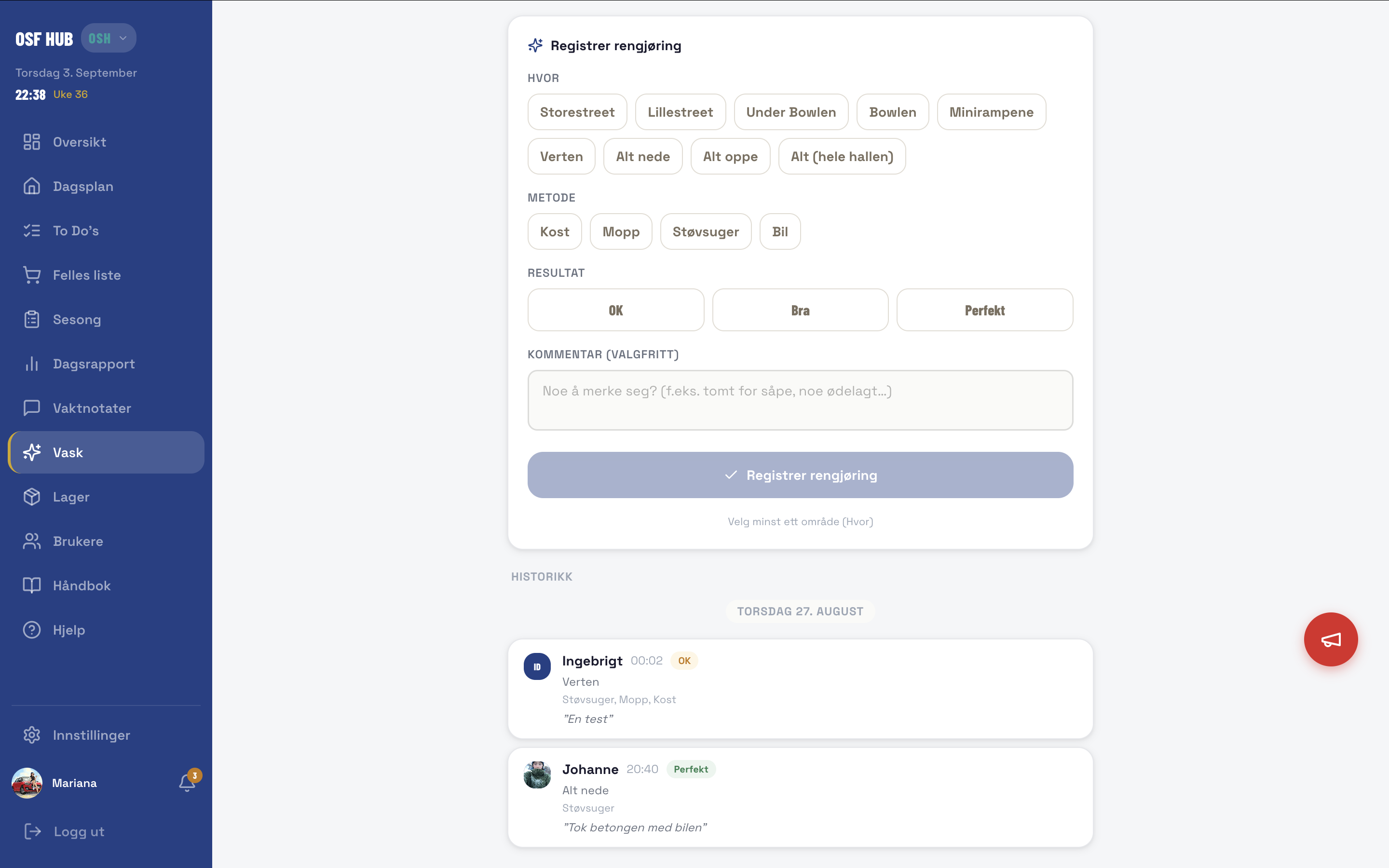
Cleaning log
The wash module records location, method, result, comments, and history so operational care becomes visible over time.
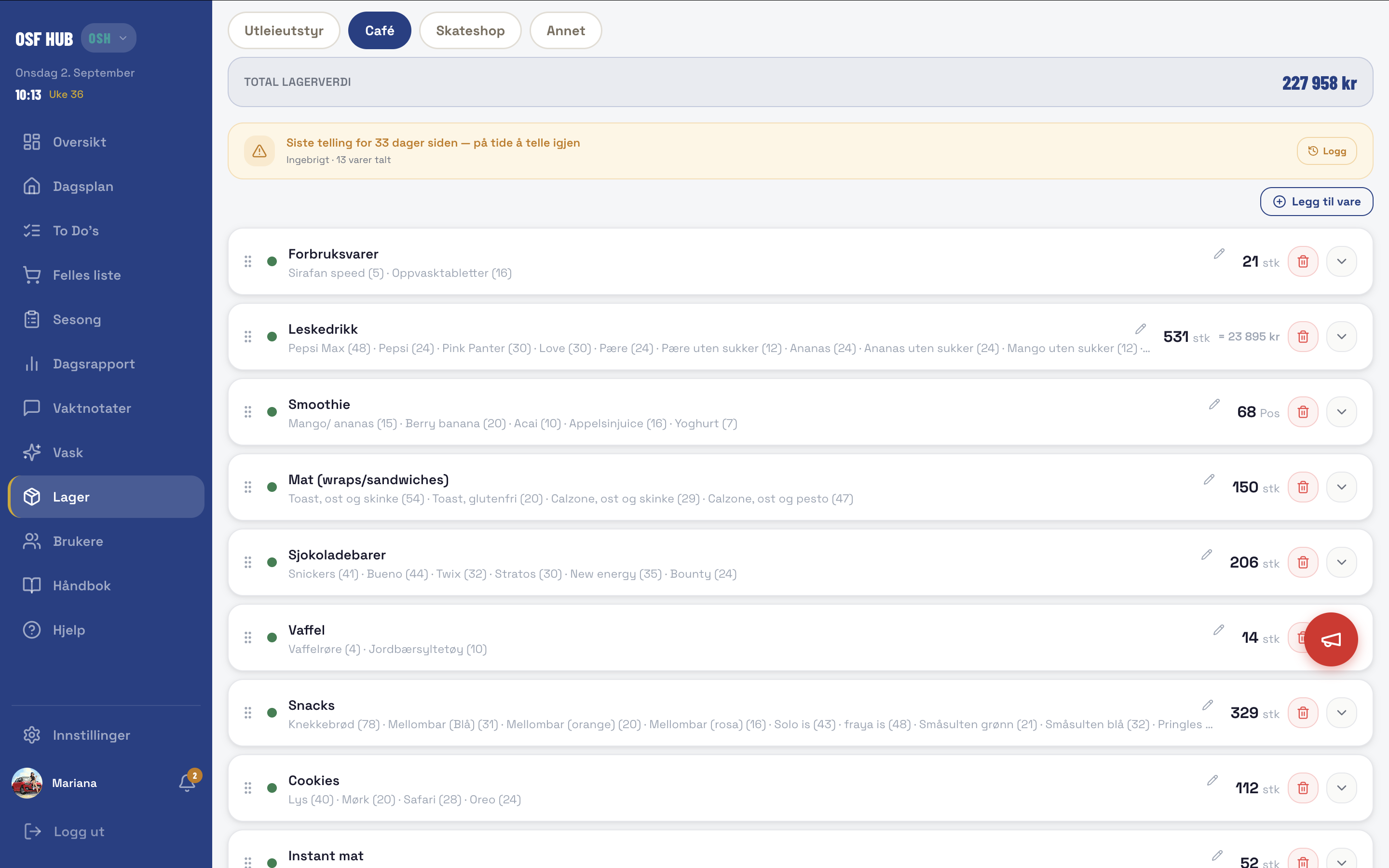
Inventory control
Stock, variants, counting logs, and total value are managed inside the same operational system instead of separate sheets.
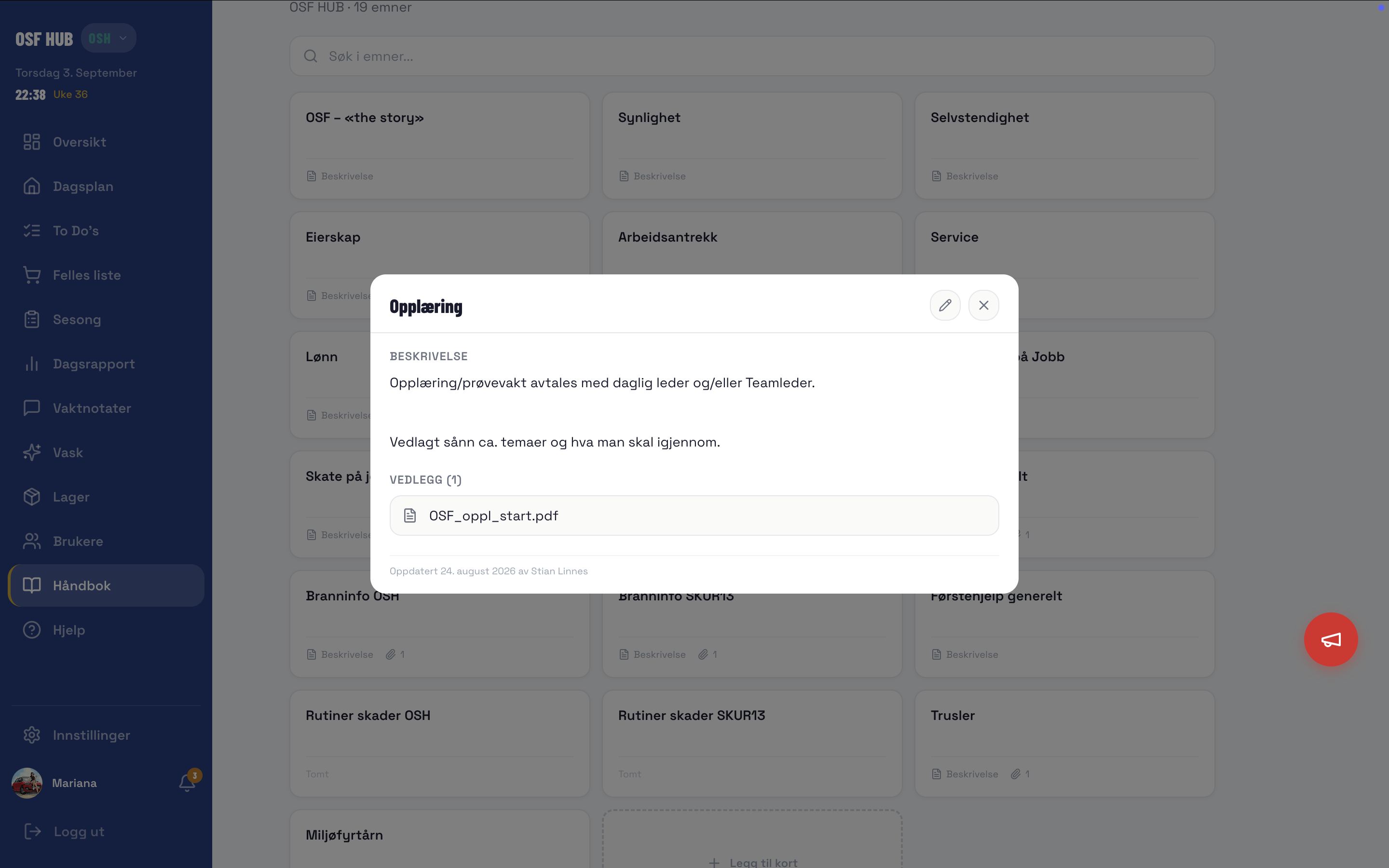
Knowledge base
Handbook and help sections centralize routines, onboarding material, attachments, and park-specific documentation.
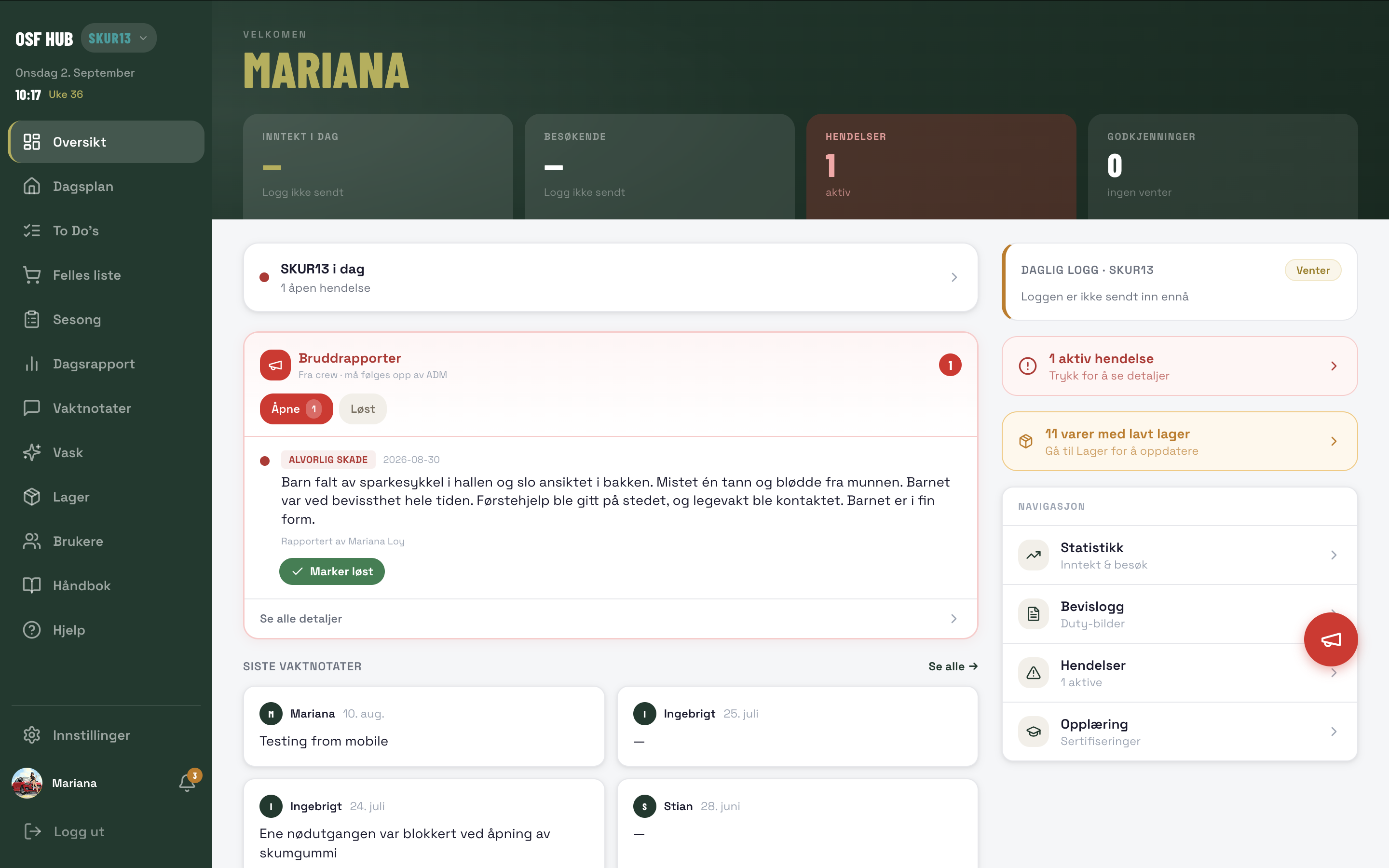
SKUR13 mode
Green screens represent SKUR13: employees with access can toggle parks, while incidents, logs, routines, and data stay separated.
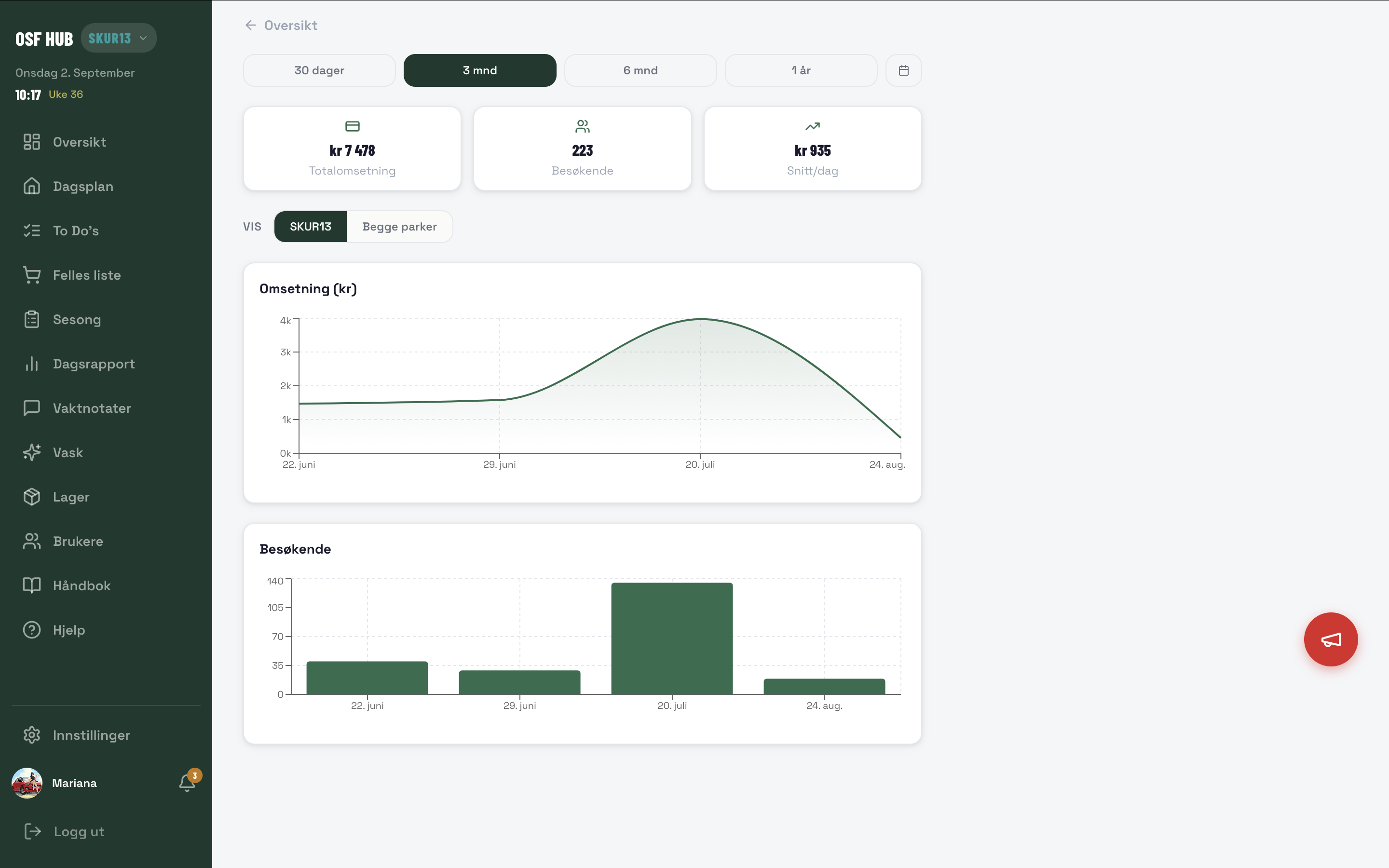
Park-specific statistics
Shared analytics patterns can filter by one park or both, making overlapping operations comparable without mixing records.
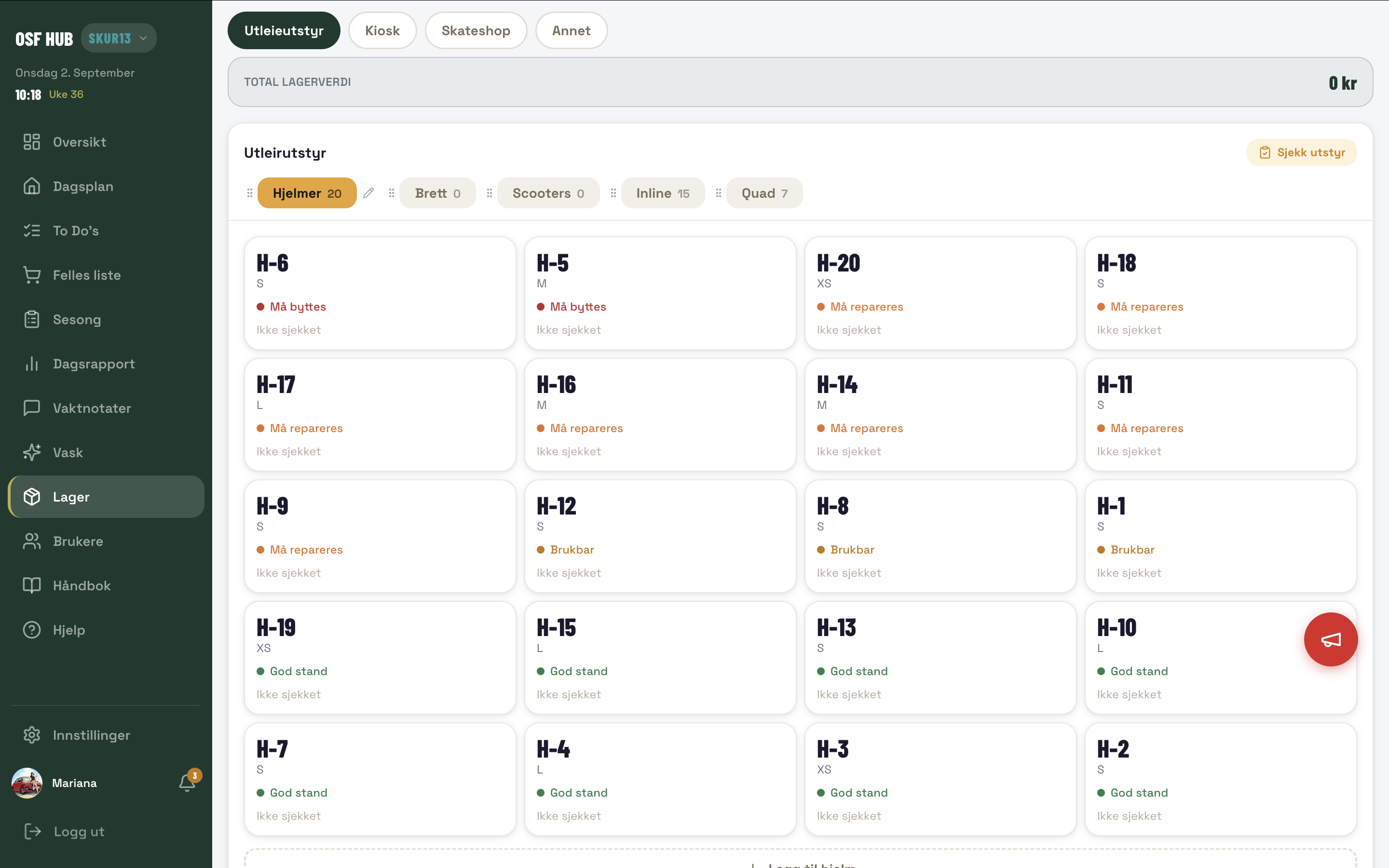
Equipment inspections
Rental and safety equipment can be tracked item by item, including condition, repair needs, replacement status, and notes.
07 — Design Principles Applied
Legibility before beauty
Complex data — cash, inventory, incidents — was made scannable and clear.
Structure is the argument
The role-based access hierarchy signals who needs what, and when.
Earn every click
Workflows ask only for the interactions needed to complete the job.
Honest complexity
Multi-faceted operations are presented simply, without pretending they are simple.